What happened
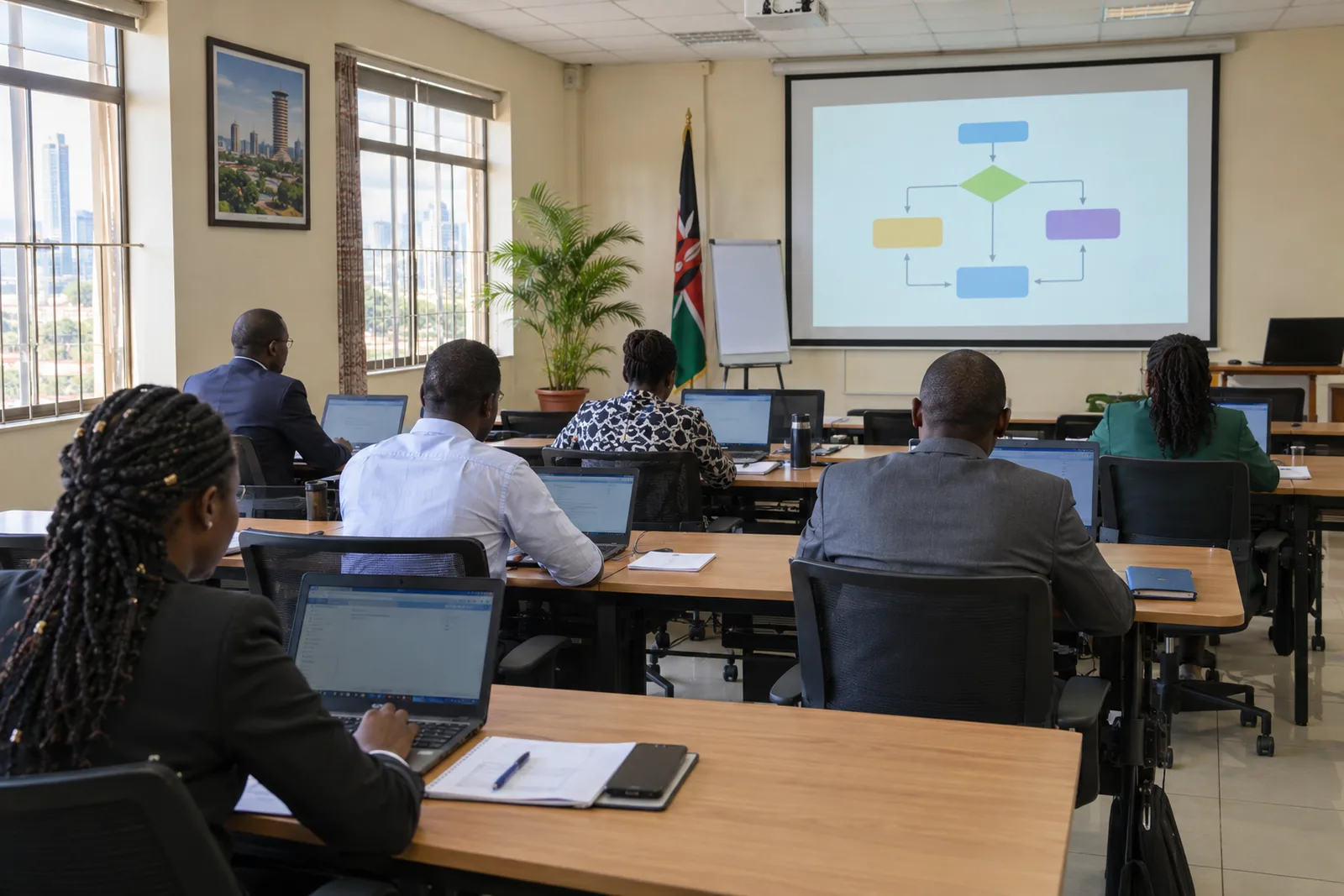
On 8 October 2026, 1,239 learners graduated at the Kenya School of Government (KSG) in Nairobi after completing the UNESCO–Oxford course on Artificial Intelligence and Digital Transformation in Government. The first cohort attracted 2,730 learners, according to the UN Joint SDG Fund, which helps pay for the programme. The course, developed by UNESCO and the University of Oxford and delivered with KSG, covers AI ethics, human-centred digital transformation and data governance.
On 21 October a second cohort opened. It aims to reach an additional 9,000 public servants at national and county level, and 2,380 people had enrolled by the time the Joint SDG Fund published its update on 23 October. The graduation coincided with the launch of KSG’s new e-Learning and Information Technology Institute (eLITI), which is meant to make training available to officers wherever they work. Citizen Digital reported that the institute will offer specialised training in digital technologies and AI and help public institutions identify skills gaps.
Why it matters
Governments everywhere are adopting digital platforms and AI tools, often faster than their staff can judge them. A procurement officer who does not understand how an algorithm makes decisions cannot ask the right questions of a supplier. A county official who has never thought about data protection may not see the risks in a new system. The Kenyan course is aimed squarely at that gap. When it launched in November 2025, UNESCO said it targeted officers at Job Grade CG8 (JG N) and above, the people who shape and approve policy.
The officials behind it stress that this is about services, not gadgets. “Digital transformation must improve how government serves citizens and businesses alike. While infrastructure is essential, we must also invest in the skills of public servants to deliver services that are more accessible, timely, equitable and responsive to people’s needs,” said Elizabeth Birgen, Director of ICT at the Ministry of Information, Communications and the Digital Economy, as quoted by the Joint SDG Fund.
Digital transformation is ultimately about people, institutions and values, not technology alone.
Louise Haxthausen, Director of the UNESCO Regional Office for Eastern Africa
The wider picture
The training sits inside a bigger national push. Kenya launched its National AI Strategy 2025–2030 at the Kenyatta International Convention Centre in March 2025, and the government said it would need at least Ksh152 billion to carry it out by 2030, Citizen Digital reported at the time. ICT Cabinet Secretary William Kabogo said at the launch that the focus “must be equipping our workforce with the right skills so that AI can be a catalyst in their operations.”
DigiKen, the UN joint programme behind the course, wants to strengthen the digital and AI skills of 20,000 public servants by 2027. It is led by UNESCO with UNCDF, UNEP and UN Women, and is funded through the Joint SDG Fund with contributions from the European Union and 17 donor countries. To reach officers outside Nairobi, it is working through 15 Digital Innovation Hubs in 12 counties. At a steering committee meeting on 15 September 2026, Principal Secretary for ICT and the Digital Economy John Tanui committed to work with the Public Service Commission and KSG to build AI and digital skills into induction, leadership training, talent management and continuing professional development, the Joint SDG Fund says. UNESCO and KSG are also linking the course to a Regional Centre of Competence for Digital Transformation hosted at KSG by the government, UNDP and Microsoft.
KSG’s Director General, Prof. Nura Mohamed, framed the new institute as a way to remove distance as a barrier. “Through flexible learning opportunities, we are enabling public servants to acquire relevant skills regardless of their location,” he said. At the launch, KSG also showcased virtual reality simulations and AI agents developed by the institute, and plans to take practical digital training to communities through its “Under the Tree” series, TechInfoAfrica reports.
Could it work elsewhere?
Very likely, and cheaply. The course is a free massive open online course, so the main costs are local: coordination, internet access, and time for officers to study. In GGND’s view, Kenya’s most useful move is not the course itself but the plan to write digital skills into the civil service’s own career system. A one-off course fades; a requirement for promotion lasts. Many other countries building digital public services face the same problem of officials buying technology they cannot fully assess.
What remains unresolved
- Completion rates. 1,239 of 2,730 first-cohort learners graduated, about 45%. That is high for an online course, but it means more than half did not finish, and the reasons are not published.
- A long way to the target. The second cohort aims for 9,000 public servants and had 2,380 enrolments a few days after opening. Reaching 20,000 trained officers by 2027 will need sustained outreach, especially in the counties.
- Awareness or capability? An online course can build understanding of AI ethics and data governance, but it does not by itself give officers the technical depth to design or audit systems.
- Proof of better services. None of the sources we reviewed sets out how DigiKen will measure whether trained officers actually deliver faster, fairer or more accessible services.
What happens next
The second cohort is now enrolling, and the Digital Innovation Hubs are meant to bring in officers from county governments. The next test is whether the Public Service Commission and KSG turn the steering committee’s commitment into formal requirements for induction and promotion. GGND will follow whether the 20,000 target is met by 2027, and whether Kenyans notice the difference at the counter and online.
Sources
- UN Joint SDG Fund Kenya Expands AI Training to Strengthen Public Services and Digital Governance (23 October 2026)
- Citizen Digital Training of public servants in digital skills receives boost after gov’t inks new deal (9 October 2026)
- TechInfoAfrica Kenya School of Government Launches Digital Institute as Over 1,200 Public Officers Graduate in AI Training (13 October 2026)
- UNESCO Kenya Launches UNESCO–Oxford free online course on AI and Digital Transformation (10 November 2025)
- Citizen Digital Kenya launches National AI strategy with Ksh.152B implementation budget (27 March 2025)
Analysis and context are by The GGND Team. Where we draw our own conclusions, we say so. To report an error, contact us.