What happened
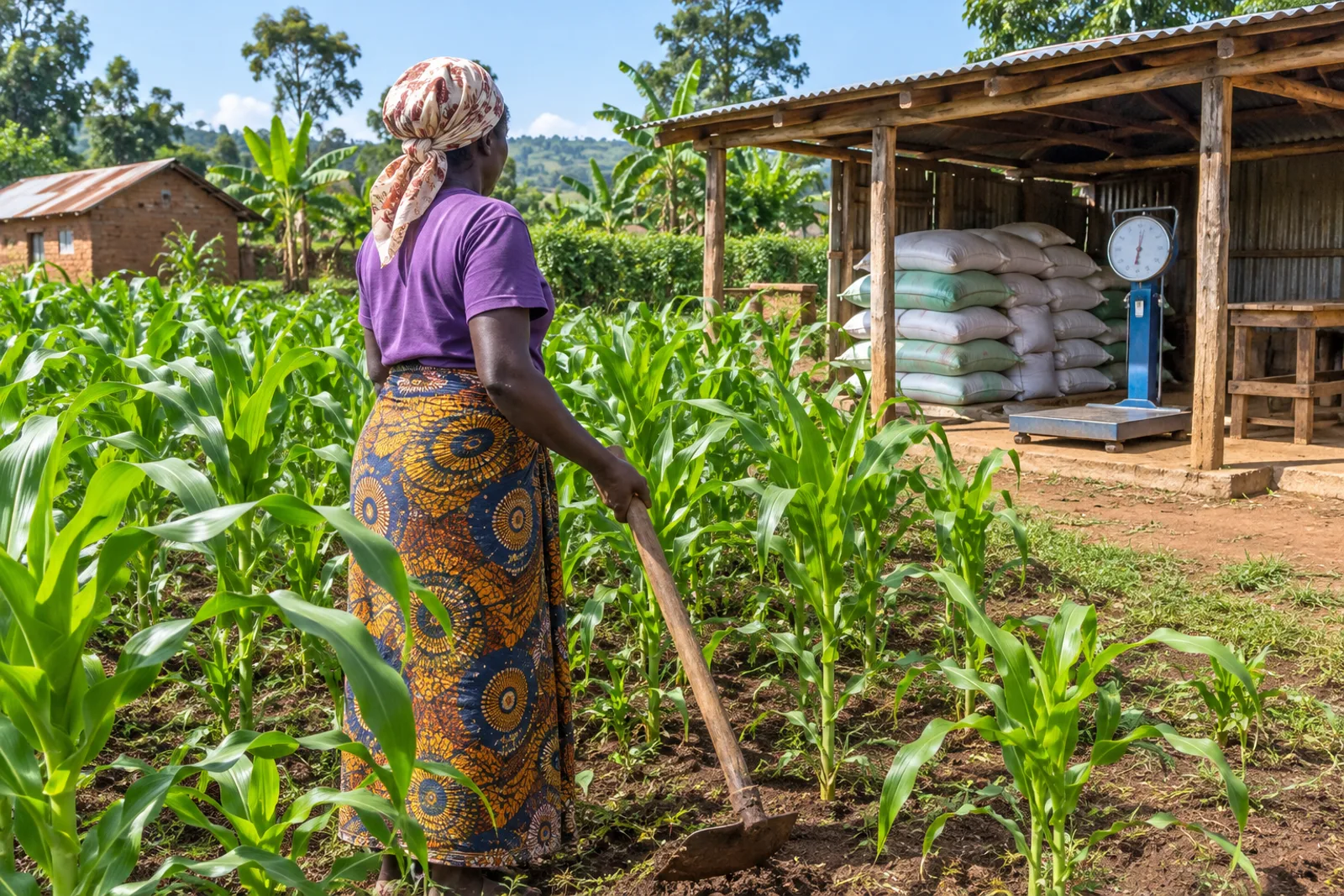
Women smallholder farmers in a large Kenyan programme are earning more from each hectare of land than men, even though they farm smaller plots and have less access to equipment and credit. That is the headline finding of a nine-year evaluation of the Farm to Market Alliance (FtMA), released on Wednesday 18 November at the FtMA National Stakeholder Forum 2026 in Nairobi, the Kenya News Agency reported.
Women in the network earn an average of KES 82,494 per hectare in main-season revenue, compared with KES 69,833 for men, an 18% difference. Women farm an average of 1.9 acres, against 2.8 acres for men, and 45% of the women surveyed have no formal education, compared with 26% of men, Capital FM reported.
FtMA is implemented on the ground by the Cereal Growers Association (CGA), with support from the World Food Programme (WFP) and other partners. Since 2017 it has grown from two counties to 13, and works through 2,126 community-based Farmer Service Centres, which sell inputs, give training and gather produce for buyers. The centres have reached about 401,955 farmers and marketed 664,009 tonnes of produce, according to the evaluation.
Why it matters
The finding challenges a common assumption that women farmers are less productive. The evaluation credits better access to inputs, agronomic training and markets for the gains. Certified seed use among surveyed farmers stands at 88%, and 95.2% can reach a Farmer Service Centre within an average of two kilometres. Farmers practising conservation agriculture raised main-season maize yields by 60%, from 2.83 to 4.53 tonnes per hectare, and 98.4% of households had an acceptable food consumption score, Capital FM reported.
Young people are part of the story too. There are 1,015 youth-run centres, each employing an average of 6.1 young people, and young farmers recorded maize yields of 3.6 tonnes per hectare, against 2.9 tonnes for older farmers.
When women and young farmers are connected to reliable inputs, agronomic training, and structured markets, they deliver the highest returns per acre in Kenyan agriculture.
George Njoroge, FtMA Kenya Country Coordinator
The wider picture
The same evaluation shows how much is still holding women back. Centres run by women own an average of two pieces of equipment, compared with 3.2 for those run by men, and their average annual profit is KES 143,989, against KES 515,253 for male-led centres. Only 8.5% of all centres own shelling or threshing machines, and women can lose up to half of their bean harvest during manual drying, shelling and bagging, Capital FM reported.
Money is the other gap. Although 97% of centres and 89.4% of farmers have bank accounts, 70% of centres have no formal credit, largely because agricultural loans often require land as collateral. Centres rely instead on informal borrowing at interest rates of about 20%. And while 88.9% of farmers sell their produce, only 3.8% have formal contracts with buyers and just 18.5% are paid promptly, Kenyan Business Feed reported.
An analysis in Sacco Review put it sharply: women-led centres keep about KES 28 in profit for every KES 100 made by male-led ones. The writer noted that the report does not split the collateral problem by gender, but suggested, as an inference rather than a finding, that land registered in men’s names may leave successful women without the asset lenders want.
“Closing the equipment, credit, and digital gaps for these entrepreneurs is the single fastest way to cut post-harvest losses and boost rural household incomes,” said Anthony Kioko, chief executive of the CGA, the Kenya News Agency reported.
Could it work elsewhere?
The model is simple: a local business within walking distance that sells seed and fertiliser, gives advice and buys the harvest. It earns commissions on inputs, aggregation and sales, which Agriculture Cabinet Secretary Mutahi Kagwe, represented at the forum, said gives centres a reason to keep going after project support ends. In GGND’s view, the lesson for other countries is that the farm-level gains are real, but they will not turn into higher incomes unless women can also get loans without land titles, and buyers who sign contracts and pay on time.
What remains unresolved
- Per hectare is not per farm. Because women farm smaller plots, their total income can still be lower. Streamline Feed estimated that a typical man in the network still grosses about 25% more per farm in a main season.
- Who measured it. The reports we read describe the study as FtMA’s own evaluation and do not say whether it was independently reviewed, or how the women and men surveyed were selected.
- Life after donors. About 70% of centres are projected to stay viable after support ends. WFP Kenya’s Bai Mankay Sankoh cautioned that this reflects potential sustainability, not proven survival without outside help.
- The profit gap. Women-led centres make far less money. The report recommends asset finance and collateral-free credit, but no lender has yet committed to it publicly.
What happens next
FtMA and its partners are asking banks, donors, telecoms companies and county governments to fund equipment for women-led centres, offer supply-chain credit backed by buyer contracts, cut data costs and make the centres part of county extension services. “The ultimate test of our work is not whether a programme can function while we are funding it. It is whether the people, businesses and institutions we have supported can continue to succeed when that funding ends,” said Sankoh, Capital FM reported. GGND will look for the full evaluation and for any new finance aimed at women-led centres.
Sources
- Kenya News Agency Women farmers productive despite limited resources, study reveals (20 November 2026)
- Capital FM via AllAfrica Kenya: Women Farmers Earn 18 Percent More Per Hectare Despite Smaller Farms, FTMA Evaluation Finds (20 November 2026)
- Kenyan Business Feed Credit and Equipment Gaps Hold Back Women-Led Agribusinesses in Kenya (20 November 2026)
- Sacco Review The hidden profit gap facing Kenya’s women in agribusiness (20 November 2026)
- Streamline Feed Kenyan Women Farmers Earn More Per Hectare on Smaller Plots (20 November 2026)
Analysis and context are by The GGND Team. Where we draw our own conclusions, we say so. To report an error, contact us.