What happened
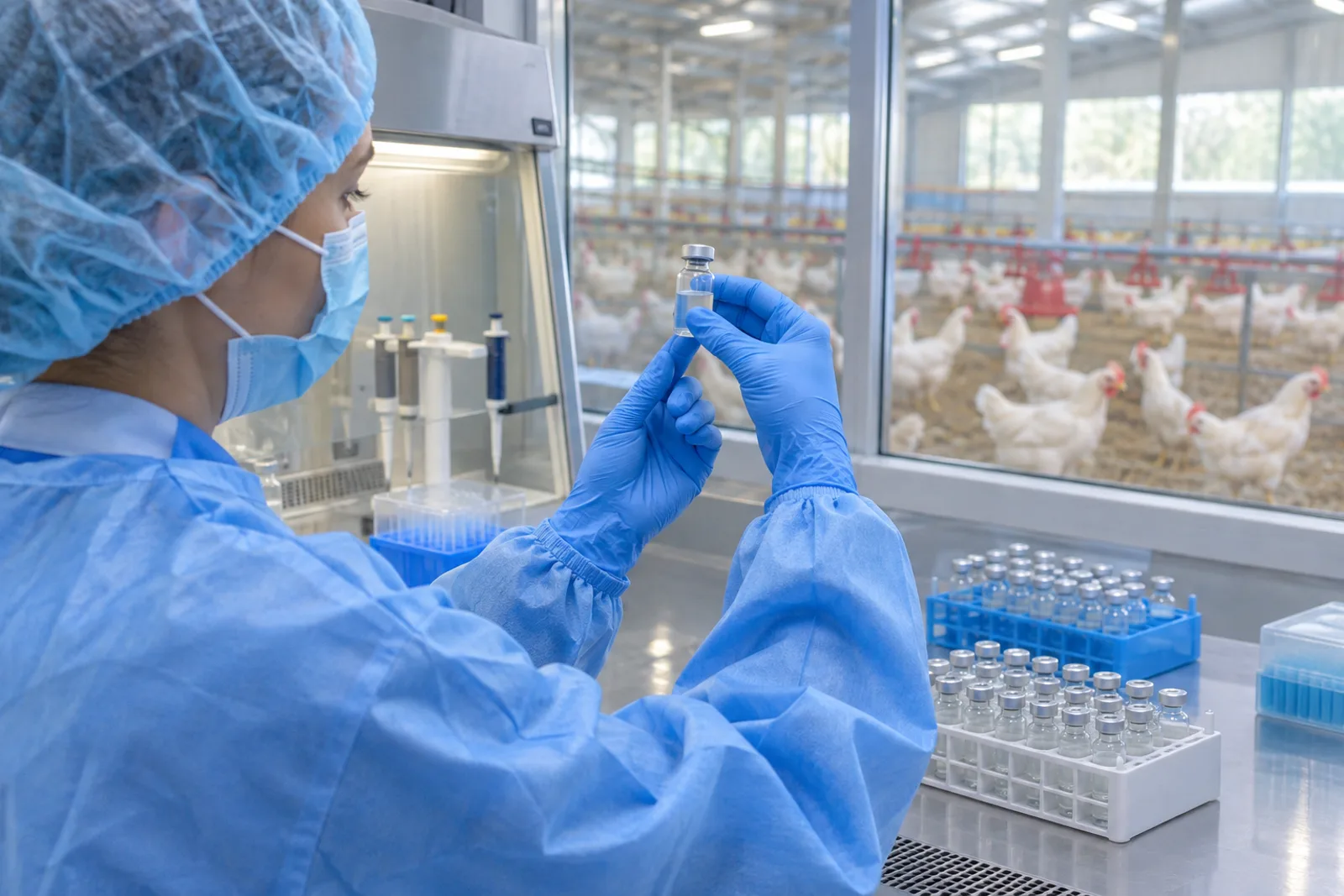
On 20 November, India’s Agriculture Minister, Shivraj Singh Chouhan, dedicated the country’s first indigenous vaccine for chickens against H5N1 avian influenza, or bird flu, at a ceremony in Bhopal. It was developed by the ICAR-National Institute of High Security Animal Diseases (NIHSAD) and is priced at ₹1–2 per dose so that even small poultry farmers can afford it, the Press Information Bureau said. The minister also announced a new animal disease research laboratory in Bhopal costing about ₹300 crore.
The vaccine is an inactivated vaccine against the highly pathogenic H5N1 virus of Clade 2.3.2.1a, the strain responsible for most bird flu outbreaks in Indian chickens. Until now, no specific commercial vaccine has been available against this clade, the government said. The minister described it as the world’s first vaccine against this particular variant.
The research team named by the government was Dr S. Nagarajan, Dr Manoj Kumar, Dr C. Tosh, Dr H. V. Murugkar, Dr Aniket Sanyal, Dr Senthil Kumar D., Dr Naveen Kumar and Dr Yogisharadhya R. Chouhan said they worked for months through weekends under strict biosafety rules, The Indian Express reported.
Why it matters
Bird flu can kill nearly 100% of infected birds, and outbreaks lead to mass culling and trade restrictions. Since the disease was first detected in India in 2006, more than 500 outbreaks of the H5N1 and H5N8 subtypes have been reported. The 2006 outbreak alone caused estimated losses of ₹2,200–3,000 crore, according to the government. Chouhan said about 10 lakh (one million) chickens died in that first outbreak in Navapur, Maharashtra, about 9 lakh in 2021 and another 2 lakh this year.
The virus is also a concern for people. The World Health Organization has recorded 1,003 human cases of H5N1, including 479 deaths, in 25 countries since 2003, the government said. Clade 2.3.2.1a has also been found in other animals, including mammals, along with three human cases. In GGND’s view, a cheap vaccine that matches the local strain could help protect farmers’ flocks and reduce the chances of the virus moving into other animals and people.
Bird flu causes large-scale chicken deaths and huge economic losses for poultry farmers. The indigenous vaccine will strengthen bird flu control in India and protect chickens.
Shivraj Singh Chouhan, India’s Minister of Agriculture and Farmers’ Welfare
The wider picture
The vaccine is the latest from the Bhopal institute, which has previously developed vaccines for Gumboro disease, Brucella abortus S-19 Delta, Classical Swine Fever and African Swine Fever. Chouhan said diseases such as foot-and-mouth disease, lumpy skin disease, brucellosis and peste des petits ruminants together cause annual losses of about ₹56,000 crore, the Press Information Bureau said.
The launch was also political. Chouhan used the event to attack opposition leaders who, he said, question India’s institutions and scientists while abroad, The Indian Express reported. GGND reports the science, not the politics.
An editorial in the veterinary journal Pashudhan Praharee welcomed the vaccine but warned that “scientific achievement and field-level protection are not the same thing”. Regulatory approval, technology transfer, large-scale manufacture and an approved vaccination strategy are separate steps, it said.
Could it work elsewhere?
Bird flu is a global problem, and many poorer countries rely on culling because vaccines are costly or poorly matched to local strains. In GGND’s view, the most transferable part is the approach: a public institute developing a low-cost vaccine against the strain actually circulating in its own country. Whether it works in practice will depend on field results that have not yet been published.
What remains unresolved
- Who makes it, and when. The official releases do not name a manufacturer or licensee, or say when farmers will be able to buy the vaccine.
- Evidence. The releases we read do not give trial sizes, efficacy figures, dose schedule or how long protection lasts.
- A moving target. Flu viruses evolve. Pashudhan Praharee noted that continuous sequencing will be needed to check that the vaccine still matches circulating strains.
- Policy. India has relied on culling to control outbreaks. How vaccination will fit with culling and surveillance has not been set out.
What happens next
The next steps are licensing, production and a government decision on where and how the vaccine will be used. GGND will look for published trial data, the name of a manufacturer and the first vaccinated flocks.
Sources
- Press Information Bureau, Government of India Union Minister Shivraj Singh Chouhan Dedicates Country’s First Indigenous H5N1 Bird Flu Vaccine to the Nation in Bhopal (20 November 2026)
- Press Information Bureau, Government of India Shri Shivraj Singh Chouhan to dedicate India’s First Indigenous H5N1 (Clade 2.3.2.1a) Chicken Vaccine to the Nation on 20 November (18 November 2026)
- The Indian Express India’s bird flu fight gets a homegrown weapon: First indigenous vaccine against H5N1 developed (20 November 2026)
- Pashudhan Praharee India’s First Indigenous H5N1 Vaccine: A New Shield for Poultry, a Test of National Preparedness (19 November 2026)
Analysis and context are by The GGND Team. Where we draw our own conclusions, we say so. To report an error, contact us.