What happened
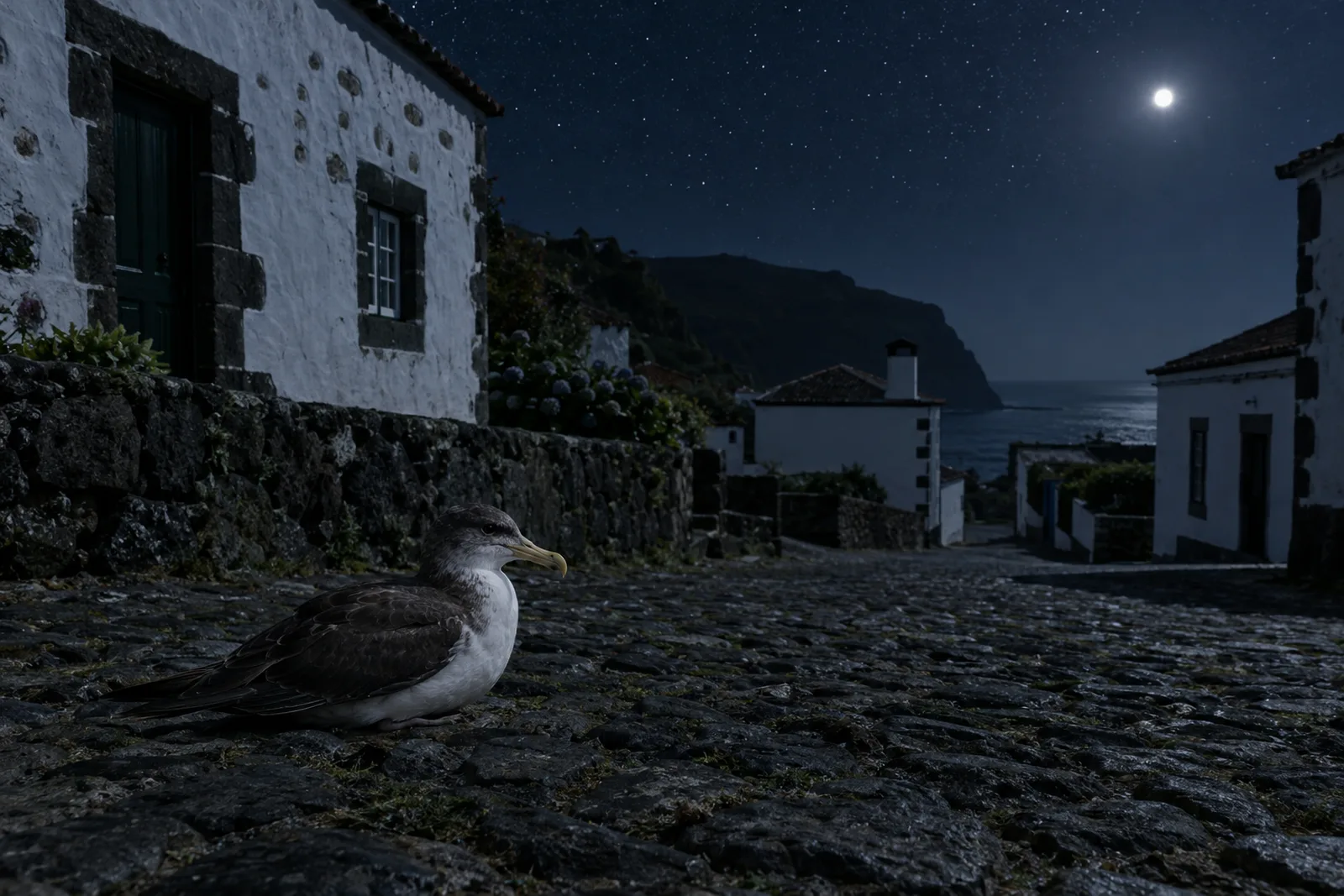
Corvo, the smallest island in the Azores, has switched off its lights again this autumn to help young Cory’s shearwaters reach the ocean. The island’s council pledged to black out streets and public buildings for almost three weeks from 21 October, Positive News reported. Corvo has about 450 people and around 6,000 nesting pairs of shearwaters. Young birds usually leave their nests over about four weeks from mid-October.
Corvo is the only island in the Azores to operate such a self-imposed blackout, New Scientist reported. On the worst nights, residents can find dozens of stranded birds on the streets of Vila do Corvo, the island’s only village.
The idea is spreading. On 30 October, from 8pm to 11pm, the bird charity SPEA-BirdLife asked residents, businesses and institutions on Madeira and Porto Santo to switch off unnecessary outdoor lighting in a ‘mega apagão’, or mega blackout, Funchal Notícias reported. The municipalities of Funchal, Santa Cruz, Câmara de Lobos and Machico, several hotels and Madeira Airport said they would take part.
Why it matters
The Azores hold about three-quarters of the world’s Cory’s shearwaters, New Scientist reported. The chicks spend months in burrows, then make their first flight at night, steering by the moon and stars. Artificial light confuses them. ‘If you have a point with light pollution, they see it as guidance and go to that place, and get disorientated,’ SPEA marine biologist Tânia Pipa told New Scientist. Once on the ground they cannot easily take off, and they risk being hit by cars, attacked or starving.
The birds can live for decades but raise just one chick a year, so every lost fledgling counts, Positive News noted. SPEA says switching off lights is among the most effective ways to reduce the number of birds that fall, according to its 2026 call for volunteers.
There are many ways to save a Cory’s shearwater, and each person can help in their own way.
Beatriz Martins, marine conservation technician, SPEA-Azores, speaking to Positive News
The wider picture
The blackouts sit alongside one of Portugal’s longest-running conservation campaigns. The Azores Government’s SOS Cagarro campaign has run since 1995, according to the regional government. In 2025, the campaign, which involves volunteers, charities, security forces, firefighters and councils, collected 7,890 grounded birds across the islands, and 7,577 young shearwaters were released by the sea, the Azores Government said.
This year SPEA is again inviting people to join rescue brigades on São Miguel and Corvo between 22 October and 10 November, the charity said. Volunteers walk the roads at night, place stranded birds in boxes and release them from the coast the next morning.
Anyone can help, said Beatriz Martins of SPEA-Azores, ‘from turning off exterior lights, carrying a box, gloves and a towel in the car in case you find a bird, to alerting the authorities if you don’t feel comfortable handling it, or even participating in the brigades’, Positive News reported.
Could it work elsewhere?
Madeira’s blackout is part of LIFE Natura@night, a project co-funded by the European Union whose partners include island councils in Madeira and the Azores and research institutes in the Canary Islands, Funchal Notícias reported. It also runs a ‘Noite com Vida’ award for businesses that adopt wildlife-friendly outdoor lighting. In GGND’s view, the cheapest conservation measure in the world may be a light switch, as long as communities agree to use it at the right time.
What remains unresolved
- How long Corvo goes dark. Positive News reports almost three weeks of council blackouts, while New Scientist describes five nights with public lights off from 9pm to midnight. The measure may vary by year and by time of night.
- Voluntary measures. Households and businesses are asked, not required, to switch off. Results depend on goodwill each year.
- Measuring the effect. Rescue counts rise and fall with weather and breeding success, so it is hard to show exactly how many birds a blackout saves.
- Growing light pollution. Short blackouts help, but permanent changes to lighting design are needed for lasting protection.
What happens next
The SOS Cagarro campaign continues until 15 November, and the Azores Government will publish its 2026 totals afterwards. Madeira’s rescue campaign runs until 5 November. GGND will follow the final counts and whether more islands adopt Corvo’s approach.
Sources
- Azores Government Campanha SOS Cagarro é esforço coletivo que garante proteção da biodiversidade nos Açores (2025 results)
- SPEA-BirdLife Uma noite, um resgate: açorianos convidados a juntar-se às brigadas SOS Cagarro (9 October 2026)
- Positive News What went right this week: the good news that matters (30 October 2026)
- New Scientist A visit to the island turning off its lights to protect rare seabirds (21 October 2026)
- Funchal Notícias SPEA-BirdLife convida a Madeira a apagar as luzes pela cagarra a 30 de outubro (27 October 2026)
- Azores Government, Directorate for Maritime Policy A Campanha SOS Cagarro
Analysis and context are by The GGND Team. Where we draw our own conclusions, we say so. To report an error, contact us.