What happened
On Thursday 19 November, Colombia, Niue, Haiti, Jamaica, Samoa and Tuvalu joined the High-Level Climate-Resilient Coral Reefs Commitment at the COP31 climate conference in Antalya, Türkiye. The coalition now has 30 signatories, 29 countries and one French overseas territory, supported by more than 50 organisations, the Wildlife Conservation Society (WCS) said.
The commitment launched at the UN Ocean Conference in Nice in June 2025 with 11 governments. Signatories promise to protect the reefs with the greatest potential to survive climate change, write them into their national biodiversity and climate plans, cut local threats such as overfishing and pollution, raise new finance, monitor progress and make sure local communities share in the decisions.
Colombia’s environment ministry said the country joined after several years of encouragement from the international community. Minister Fabio Arjona said it was an opportunity to launch “Un Millón de Corales por Colombia 2.0”, a second phase of the national programme that has supported coral restoration and conservation, the ministry said.
Why it matters
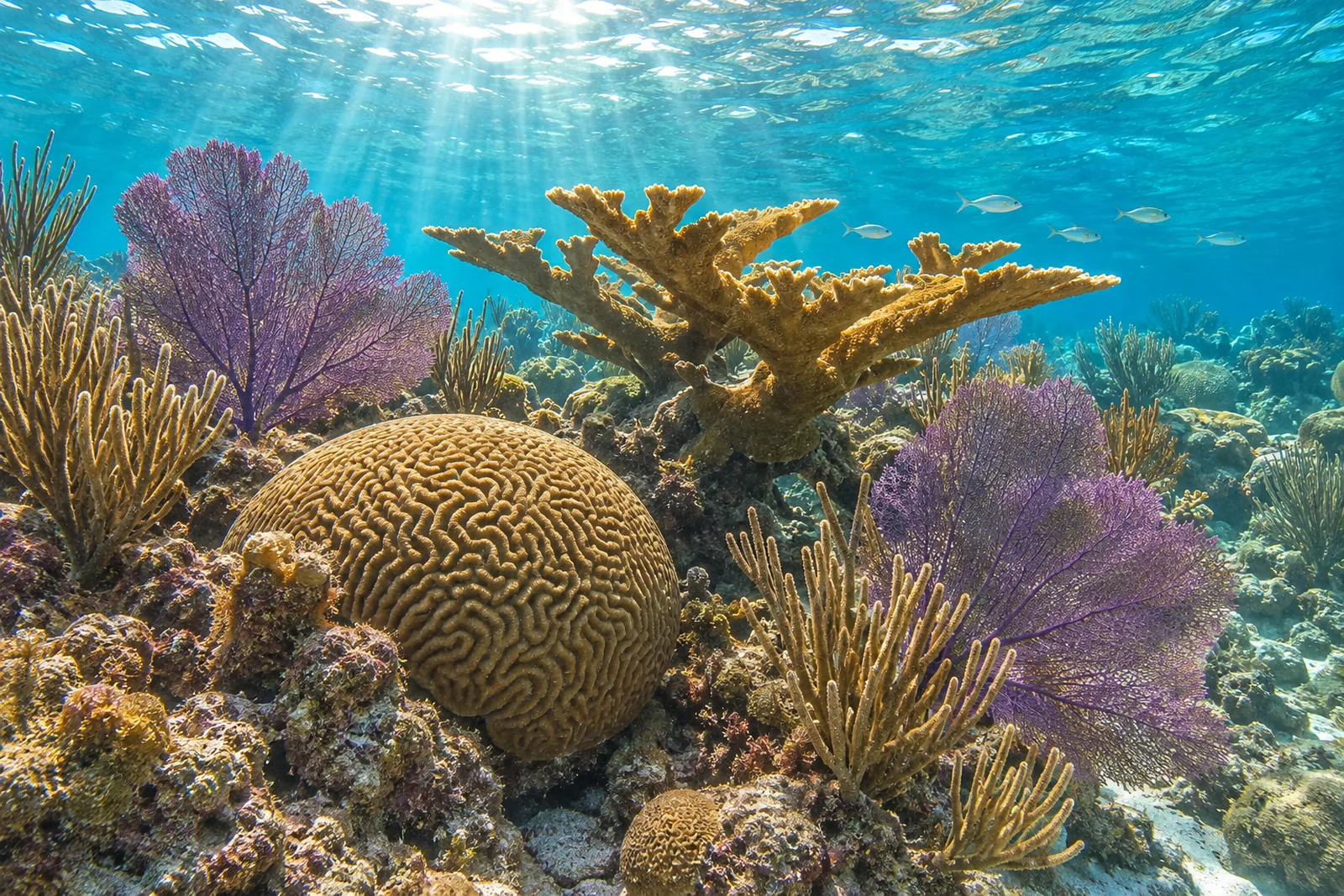
Warming seas are bleaching and killing coral around the world, so the idea behind the pledge is to focus protection where it is most likely to pay off. A study published in Environmental Research Letters in the week of the summit, known as 50 Reefs+, found climate-resilient coral reefs in at least 79 countries and 57 territories. Only around 30% of them currently fall within protected or conserved areas, WCS said.
Reefs feed coastal families, protect shorelines from storms and support fishing and tourism. In GGND’s view, the strength of this approach is that it is practical: rather than trying to save every reef equally, it asks governments to protect first the ones that science says can last.
The true measure of this global commitment will not be the number of signatures gathered, but the difference it makes for people living alongside these reefs.
Senimili Baleicakau, Fiji National Hub for Coral Reef Conservation
The wider picture
The pledge sits alongside the Coral Reef Breakthrough, which aims to protect 125,000 square kilometres of coral reefs and mobilise at least US$12 billion by 2030, Colombia’s environment ministry noted. Other signatories include the Bahamas, Belize, Mexico and the Dominican Republic.
Colombia is also working with the Dominican Republic on a binational marine conservation corridor around the Beata Ridge, an undersea mountain range in the Caribbean between La Guajira and the south of the Dominican Republic. It would link Colombia’s Cordillera Beata Natural Reserve with the Dominican Republic’s Orlando Jorge Mera Marine Sanctuary, and the two countries have already carried out joint scientific expeditions there, the ministry said. The cooperation also covers coral reefs, mangroves and the impacts of sargassum seaweed.
Speakers at the signing were clear that pledges are only a start. “The next step is to translate commitment into tangible actions,” said Dr Stacy Jupiter, who leads WCS’s global marine programme. Marie-Celine Piednoir, the commitment’s coordinator, said these efforts “must go hand in hand with global action to reduce greenhouse gas emissions”, WCS reported. The news agency EFE also covered the signing.
Could it work elsewhere?
It already is: the coalition has grown from 11 governments to 29 countries in about 18 months, from small Pacific states such as Tuvalu and Niue to large Latin American ones. In GGND’s view, the Colombia–Dominican Republic corridor is the more interesting idea to copy. Reefs, fish larvae and sargassum do not stop at maritime borders, so neighbours protecting a shared undersea range together may achieve more than either could alone.
What remains unresolved
- A pledge, not money. The commitment is political. No new funding for Colombia’s reefs was announced with the signature.
- The protection gap. Only around 30% of climate-resilient reefs are currently protected. How many of Colombia’s will be added, and when, has not been said.
- A corridor on paper. The Beata Ridge corridor is still being negotiated. Its size, rules and timetable have not been published.
- The bigger threat. Even well-protected reefs can bleach if ocean warming continues. Local protection buys time but cannot replace cuts in global emissions.
What happens next
Signatories are expected to build climate-resilient reefs into their national biodiversity and climate plans and report progress through reef monitoring. Colombia will host a regional workshop of the Global Environment Facility in March 2027. GGND will look for the details of “Un Millón de Corales por Colombia 2.0” and for a formal agreement on the Beata Ridge corridor.
Sources
- Wildlife Conservation Society Six New Countries Join the Global Effort to Protect Coral Reefs at COP31 (20 November 2026)
- Ministerio de Ambiente y Desarrollo Sostenible (Colombia) Colombia se suma a coalición global para proteger corales y se une con Bolivia para combatir delitos ambientales (19 November 2026)
- Ministerio de Ambiente y Desarrollo Sostenible (Colombia) COP31: Colombia impulsa acuerdos en mercados de carbono, conservación marina y financiamiento (17 November 2026)
- EFE 6 more nations join COP31 coral reef protection pledge (20 November 2026)
- La Prensa (Panamá) Seis nuevos países se unen a un acuerdo en la COP31 para proteger los arrecifes de coral (20 November 2026)
Analysis and context are by The GGND Team. Where we draw our own conclusions, we say so. To report an error, contact us.