In the Gulf’s mesophotic zone, coral communities live in “middle light” depths that are hard to reach, but important to the region’s marine food web. NOAA says parts of this habitat were injured by the 2010 Deepwater Horizon oil spill and are now the focus of long-term restoration work.
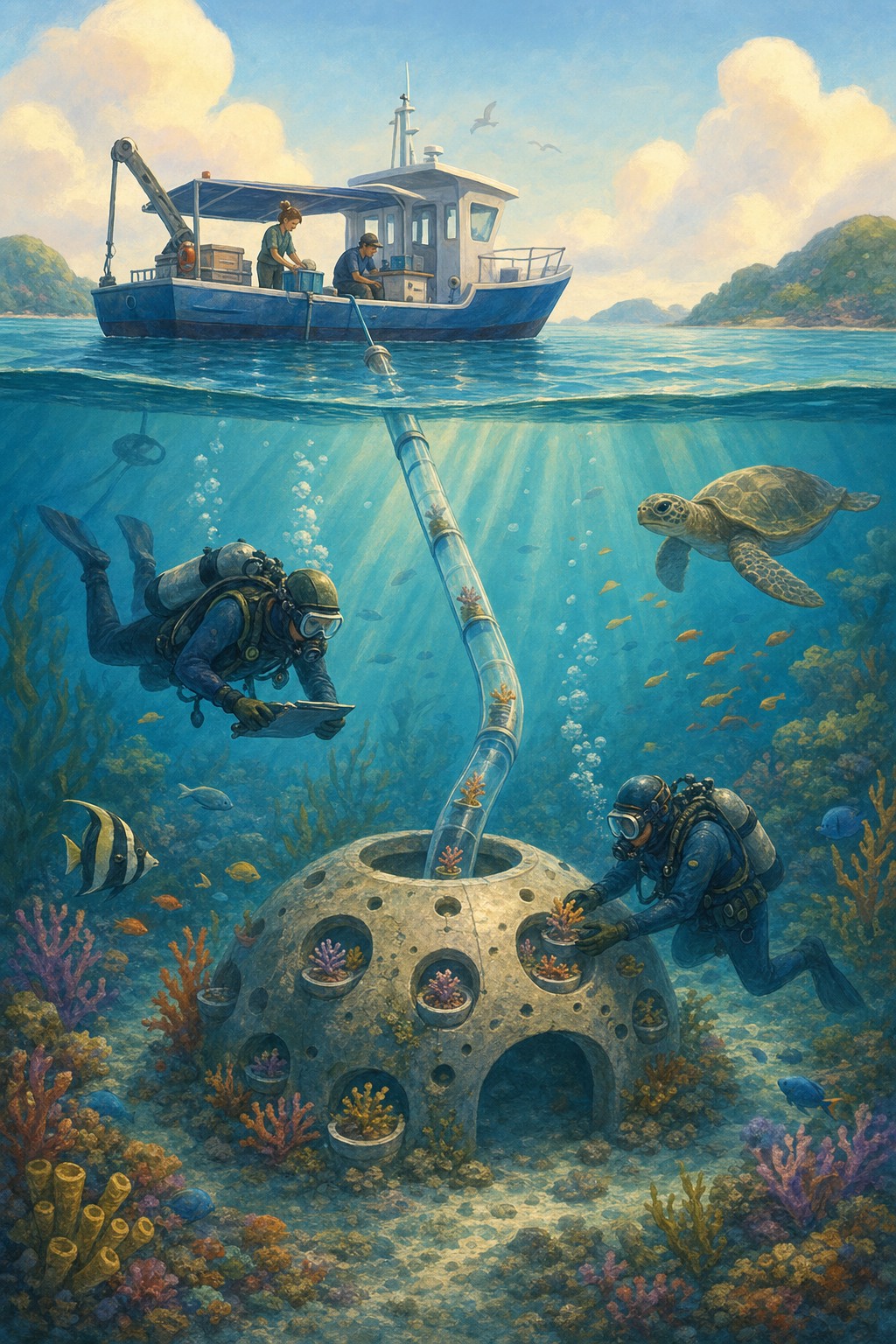
This spring, a team aboard NOAA Ship Nancy Foster set out to plant propagated corals and gather samples to better understand the seafloor and local water quality. Some corals were placed on dome-shaped concrete structures designed to support coral growth and create habitat.
A key hurdle is getting corals down safely and precisely. NOAA fisheries biologist Chris Gardner designed a streamlined “coral torpedo” to send corals quickly through the water column so divers can place them carefully at depth.
NOAA reports the mission marked the first time divers outplanted lab-reared mesophotic corals, and that the team successfully outplanted 26 corals onto artificial domes at 66 meters (about 237 feet), alongside other field work like mapping more than 14 square nautical miles of seafloor.
The agency says monitoring will continue, with plans to return and track how the corals grow as part of the broader Deepwater Horizon restoration program.