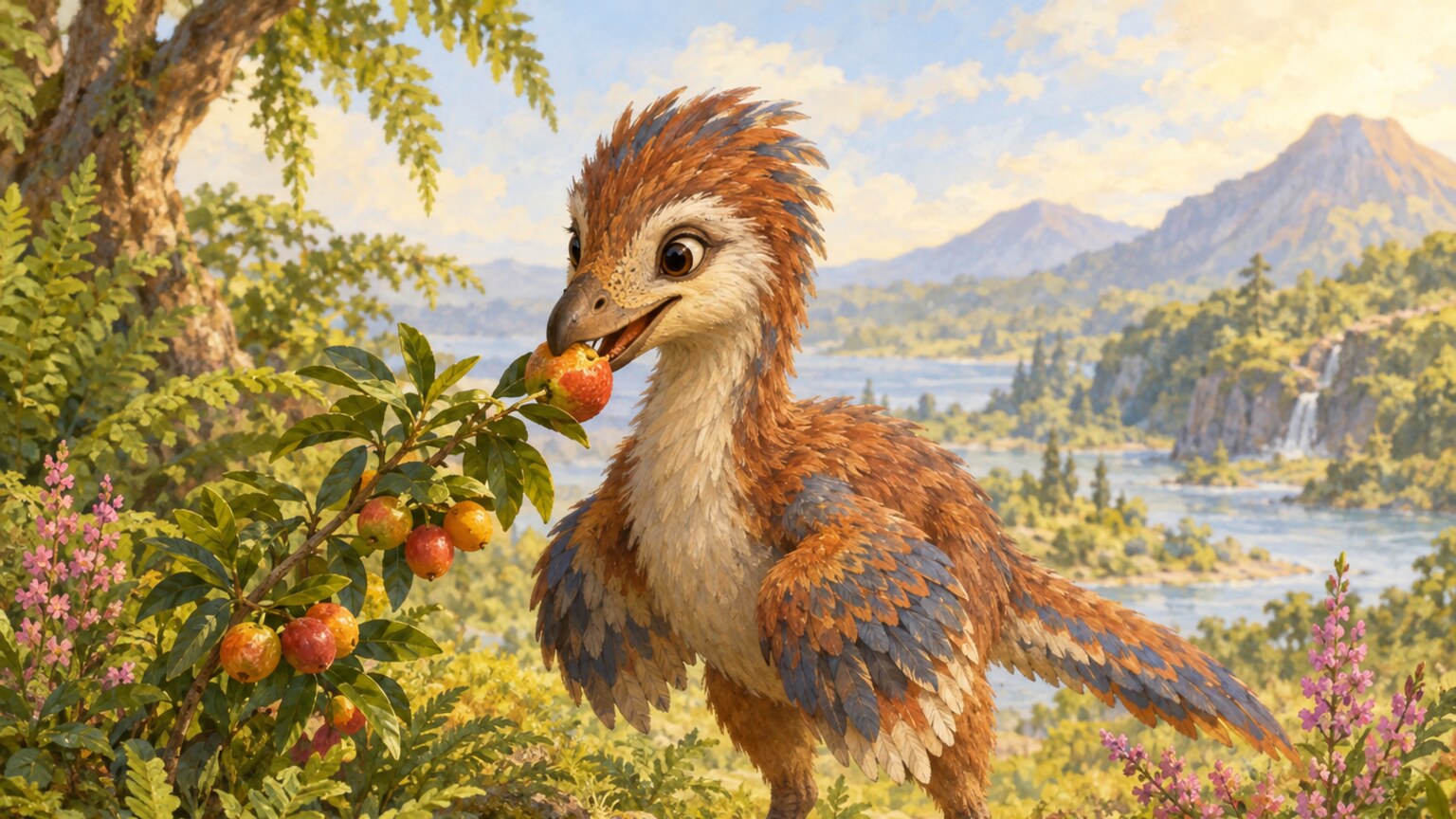
Researchers described Infernogallus jamesi, a small, feathered dinosaur, from a nearly complete skull and partial skeleton found in the Hell Creek Formation. Stony Brook University shared the discovery in an Oct. 28 report.
CT scans showed unusual palate and chewing-muscle structures that resemble those of some fruit-eating parrots. The arrangement may have let the dinosaur move its beak back and forth while chewing soft foods.
The study, reported in Nature Communications, interprets the skull as evidence of adaptations for eating fleshy fruits. This is an inference from anatomy, not direct evidence of every meal or proof of an exclusively fruit-based diet.
Researchers say the fossil may help them explore how dinosaurs interacted with flowering plants, though the animal's precise ecological role remains uncertain.