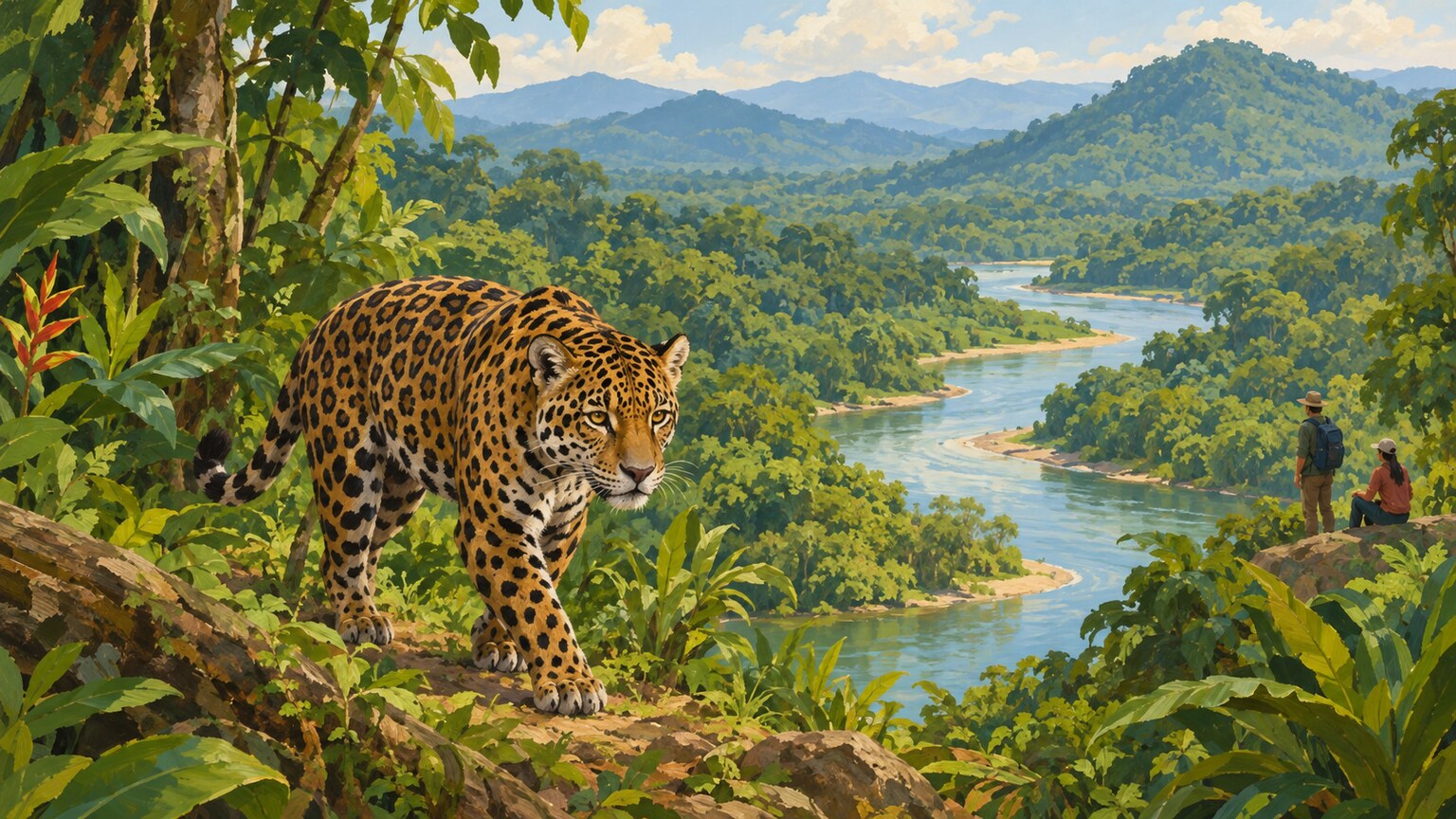
A study announced by the Wildlife Conservation Society on October 15 analysed more than 134,000 GPS locations from 99 adult jaguars in five countries to map possible connections between populations.
The researchers identified potential corridors in Central America, the Amazon Basin, and southern South America. One possible route runs from northern Bolivia through the Pantanal and Paraguay River region toward Paraguay and northern Argentina.
These are modeled pathways, not confirmed routes used by every jaguar. The researchers said the findings need field checks, including camera trapping, genetic analysis, and local ecological knowledge.