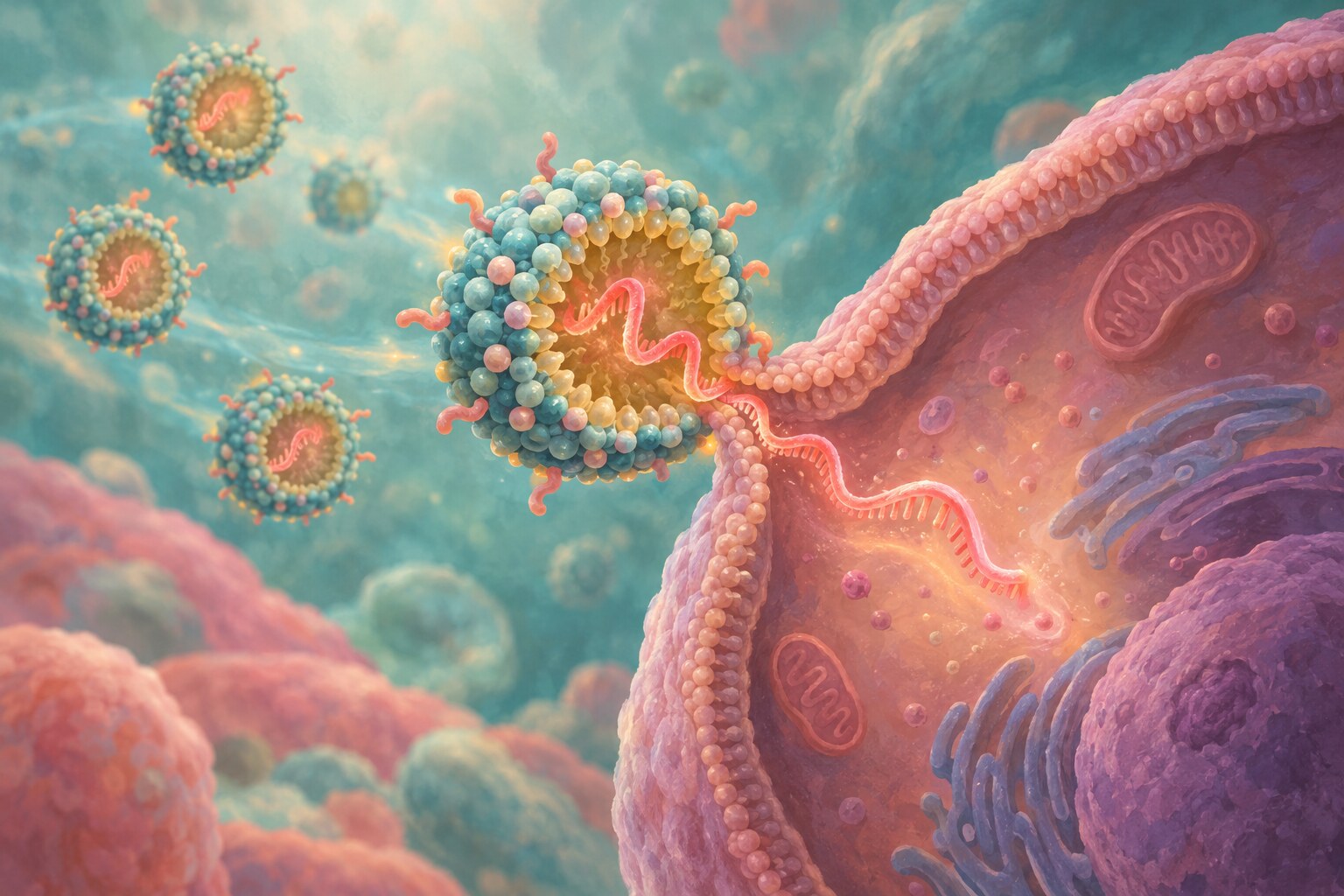
Researchers at UC Berkeley and partner institutions reported a lipid nanoparticle that changes its electrical charge depending on its surroundings, aiming to deliver mRNA while causing less inflammation.
The particles stayed positively charged in acidic conditions, which helps package mRNA and release it inside cells. In near-neutral blood, they shifted to a negative charge, which the researchers say may reduce inflammatory reactions.
In early tests, the particles showed promising results in mice with acute lung injury. They also did not trigger inflammation in the human blood cells tested, compared with six commonly used particle types.
This is still early research, not a treatment ready for patients. The first version mainly reaches the liver and spleen, and the team says it is working to improve how the particles break down and reach other tissues.