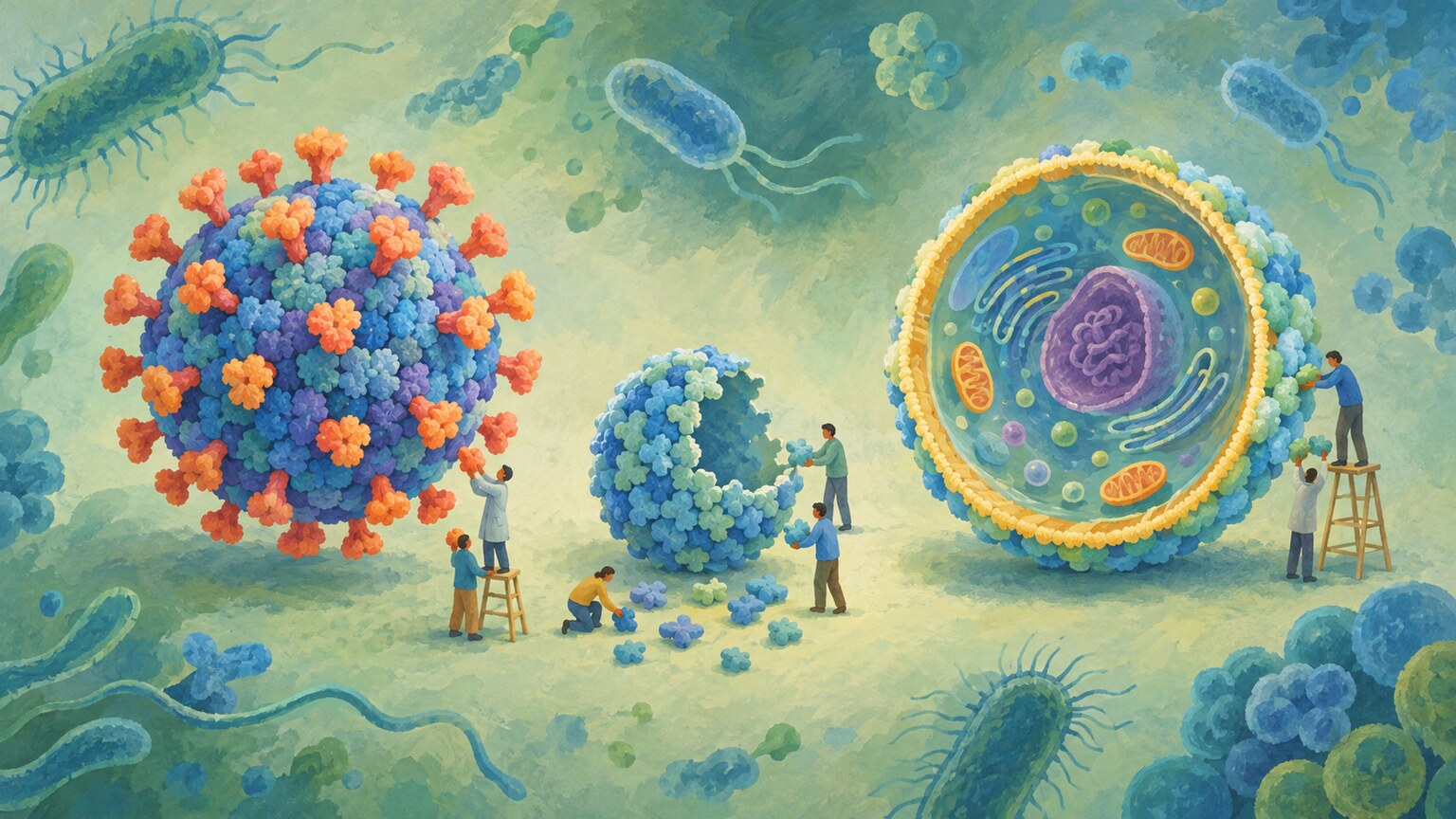
A team led by University of Miami researchers reported small viral genomes whose protein shells share features with encapsulins, compartments that some bacteria and archaea use to contain chemical reactions.
By comparing environmental DNA and protein structures, the researchers found evidence of repeated evolutionary changes in both directions between these viral shells and encapsulins. They propose that immature viral shells, called procapsids, may have helped connect the two forms.
The study is a model based on present-day genetic and structural comparisons. It does not directly observe an ancient transition or prove which type of compartment came first.