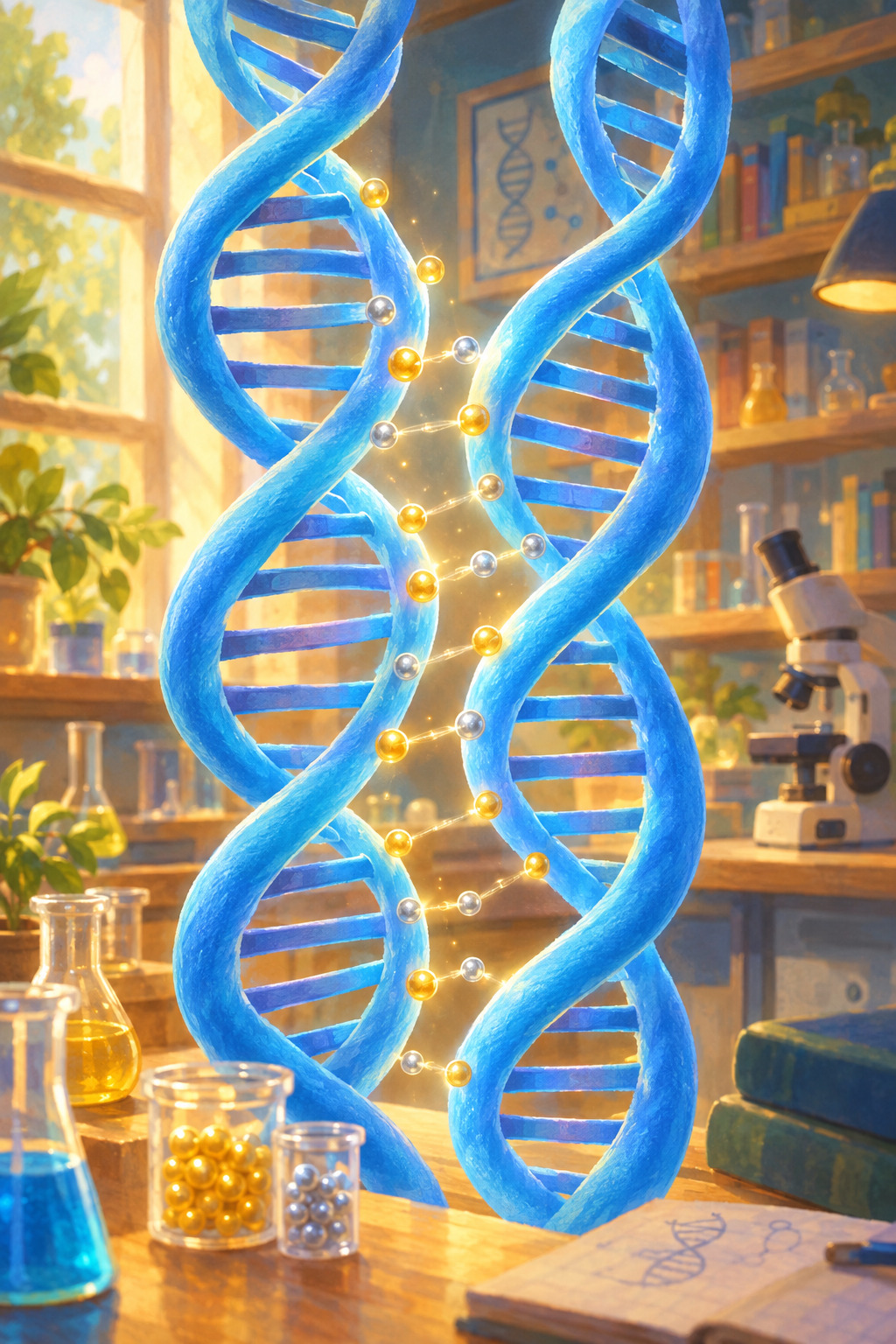
Researchers from the universities of Sheffield and York have directly watched two DNA double helices lock together, a process scientists have been trying to understand for more than 20 years.
Using atomic force microscopy, the team saw short pieces of DNA match up groove by groove. The molecules normally repel one another because both carry a negative charge.
Computer simulations showed that positively charged ions, including magnesium, calcium, and nickel, can sit inside the grooves and act as tiny bridges between the two helices.
The work supports the DNA zipper model and gives researchers a way to study DNA interactions that had previously been described mostly by theory. Those interactions are involved in processes such as genetic recombination and chromosome packaging.