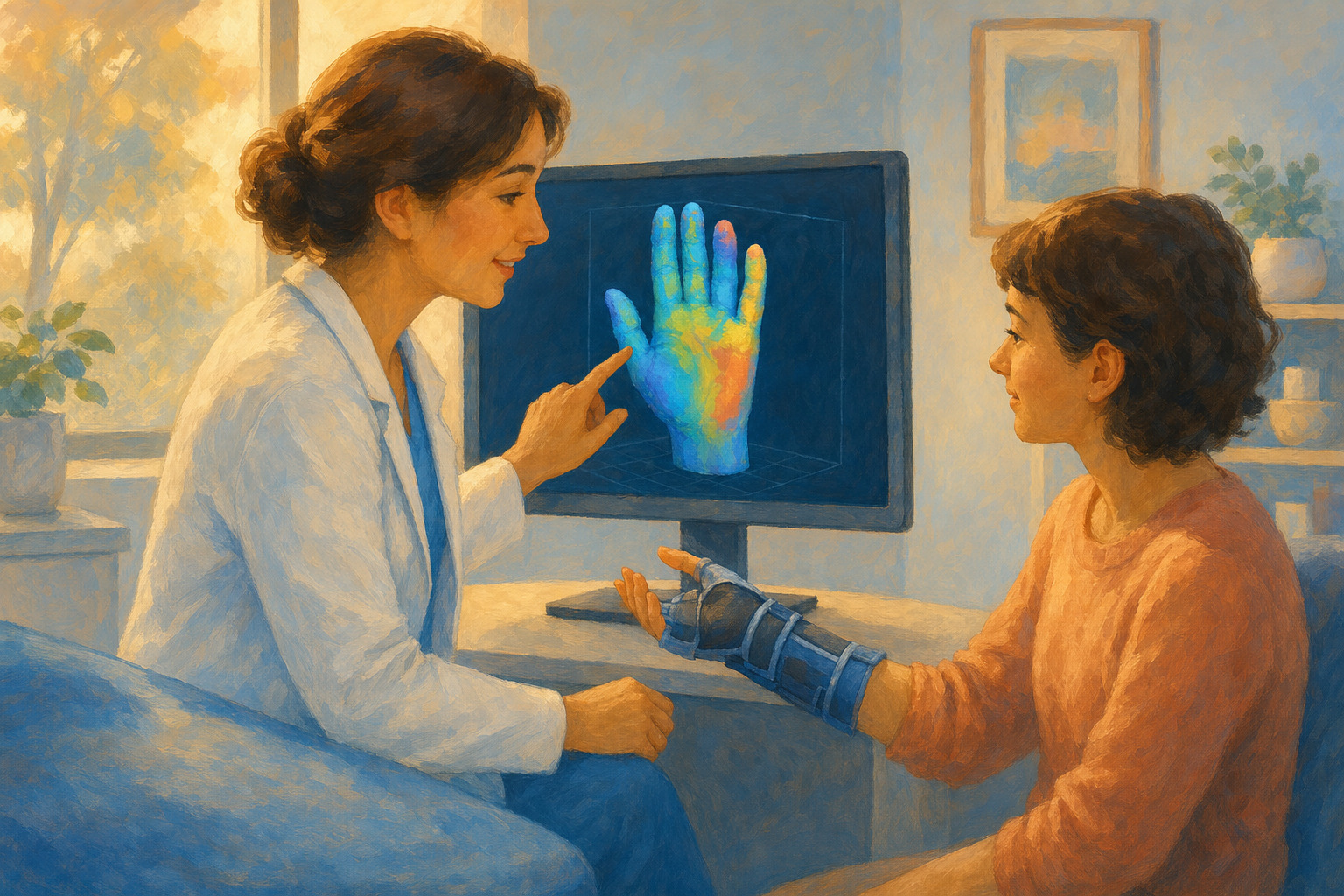
The Chinese University of Hong Kong’s Faculty of Medicine has pioneered the use of high-resolution peripheral quantitative computed tomography, or HR-pQCT, to track bone erosion in rheumatoid arthritis.
The three-dimensional scans can reveal very small changes in hand joints. The study found that tiny erosions can also appear in healthy people, so their size and location matter when doctors assess whether inflammation is causing damage.
The team followed patients for eight years and found that early, personalized treat-to-target care could keep erosions stable and, in some patients, help damaged bone improve.
By making early changes easier to distinguish, the method may help clinicians decide sooner when treatment needs to be adjusted.